Travel Guide · Cascais
How to Visit Cascais from Lisbon: The Complete Day Trip Guide
Everything you need to plan a day trip from Lisbon to Cascais: train routes, travel times, top sights, beaches, and practical tips for a perfect visit.
In this guide
- Getting the Train from Lisbon to Cascais
- Boarding at Cais do Sodré
- What to See and Do in Cascais
- The Town Center and Largo Luís de Camões
- Boca do Inferno (Mouth of Hell)
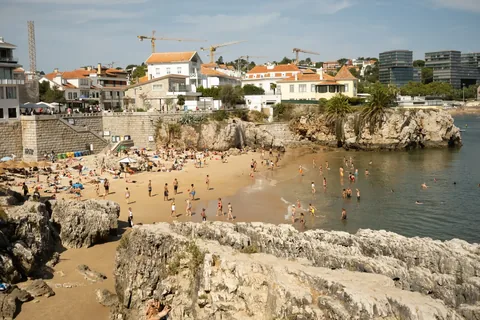
- Cascais Beaches
- Parque Marechal Carmona
- Combining Cascais with Estoril
- Eating and Drinking in Cascais
- Practical Information
- When to Visit
- How Long to Spend
- Getting Back
- Accessibility
- Frequently Asked Questions
- How much does the train from Lisbon to Cascais cost?
- Do I need to book train tickets in advance?
- Is the Lisboa Card worth it for a Cascais day trip?
- Can I visit Sintra and Cascais on the same day?
- Is Cascais safe for solo travelers?
- Conclusion
Cascais sits at the end of one of Europe's most scenic commuter railway lines, just 40 minutes west of Lisbon. Once a quiet fishing village favored by Portuguese royalty, it has grown into one of the most popular coastal day trips in Europe while retaining cobblestone squares, working fish markets, and a harbor where wooden boats still moor alongside modern yachts.
Whether you have a single afternoon or a full day, the journey is easy, affordable, and deeply rewarding.
Key Takeaways - The Lisbon–Cascais train runs from Cais do Sodré station and takes approximately 40 minutes; it is the fastest and cheapest way to arrive. - A single train ticket costs around €2.30, and a Lisbon Viva Viagem card works on the line. - The historic town center, the beaches of Praia da Rainha and Praia de Cascais, and the Boca do Inferno sea cliffs are all within walking distance of the station. - Cascais is compact enough to explore on foot, but bike rentals are widely available for reaching beaches further along the coast. - The Estoril Casino, a short stop on the same train line, is easily combined into the same day.
Getting the Train from Lisbon to Cascais
The simplest and most enjoyable way to reach Cascais is the Linha de Cascais, operated by Comboios de Portugal (CP). Trains run frequently from Cais do Sodré station in central Lisbon, located beside the Tagus riverfront in the Chiado neighborhood.
Journey time: Approximately 40 minutes to the final stop, Cascais.
Frequency: Trains depart every 20 minutes during the day, with more frequent service during peak hours.
Ticket price: A single ticket is approximately €2.30 (second class, adult, as of 2024–2025). The service uses the Lisbon integrated ticketing system, so a Viva Viagem card loaded with Zapping credit covers the fare. You can buy and top up these cards at automated machines inside Cais do Sodré station. Alternatively, a Lisboa Card includes unlimited train travel on this line.
The train passes through Belém, Estoril, and several other coastal towns before terminating at Cascais. Each stop is labeled, so the journey is easy to follow even without local knowledge.
Boarding at Cais do Sodré
Cais do Sodré is connected to the Lisbon Metro (Green Line) and sits at the western end of the Ribeira waterfront. Platforms for the Cascais line are on the ground floor, clearly signposted. Validate your card or ticket before boarding; inspectors check regularly.
What to avoid: Taxis and rideshare services between Lisbon and Cascais can take much longer in traffic and cost ten to fifteen times more. Driving is straightforward but parking in Cascais in summer requires patience.
What to See and Do in Cascais
Cascais is compact. The train station sits at the edge of the old town, and most sights are within a 15-minute walk of the platform.
The Town Center and Largo Luís de Camões
Step out of the station and walk west along Avenida Marginal for five minutes to reach the town's main square. The surrounding streets are filled with tiled buildings, independent cafés, pastry shops, and small museums. The Museu da Música Portuguesa (Museum of Portuguese Music) and the Cascais Cultural Center, housed in a former citadel, are both free or low-cost to enter.
The covered fish market near the harbor sells the morning's catch every weekday. Watching the auction, though brief, offers an authentic counterpoint to the resort atmosphere nearby.
Boca do Inferno (Mouth of Hell)
A 20-minute walk west of the station along the coast road brings you to Boca do Inferno, a dramatic sea arch and blowhole carved into limestone cliffs. Wave action thunders through the opening during high seas. A small esplanade with café tables sits directly above the rocks. Admission is free.
Cascais Beaches
Three main beaches are within easy reach of the center:
| Beach | Distance from Station | Character | Facilities |
|---|---|---|---|
| Praia da Rainha | 5 min walk | Small, sheltered, central | Cafés, lifeguards in summer |
| Praia de Cascais | 8 min walk | Wide, popular, family-friendly | Full facilities, water sports |
| Praia da Rainha / Ribeira | 10 min walk | Faces the harbor | Restaurants, boat views |
| Praia do Guincho | 9 km west | Wild, Atlantic-facing, dunes | Windsurf hire; taxi or bike to reach |
Praia do Guincho is the most spectacular beach in the area — a wide stretch of Atlantic-facing sand backed by dunes and the Sintra-Cascais Natural Park — but it requires transport. Taxis from the center cost around €15 each way, or you can rent a bike and follow the dedicated cycle path that runs the length of the coast.
Parque Marechal Carmona
This peaceful public park, a short walk north of the main square, contains tropical gardens, a small lake with ducks, a café, and the Museu Condes de Castro Guimarães, a 19th-century palace with period rooms and an archaeological collection. Entry to the park is free.
Combining Cascais with Estoril
Estoril is one stop before Cascais on the train and adds very little extra time to the day. It is home to the Casino Estoril, one of the largest casinos in Europe and the real-world inspiration cited for Ian Fleming's James Bond novels. The casino gardens facing the sea are open to the public and worth a short walk even if you do not enter.
A practical approach: stop in Estoril on the way out from Lisbon, spend 30–45 minutes, then board the next train for the final hop to Cascais.
Eating and Drinking in Cascais
The harbor area and the pedestrian streets behind it have dozens of restaurants. Seafood dominates menus; grilled sardines, percebes (barnacles), and fresh fish of the day are widely available and priced reasonably by European coastal standards.
Practical tips:
- Restaurants fill up quickly between 13:00 and 14:30. Arriving slightly before or after this window avoids waits.
- The market hall near the harbor has several informal food counters with lower prices than the waterfront restaurants.
- Pastéis de nata (custard tarts) are available at bakeries throughout the center. The quality in Cascais is uniformly high.
Practical Information
When to Visit
Cascais is pleasant year-round, but the experience varies by season:
- June–September: Warm, sunny, and busy. Beaches are crowded on weekends; weekday visits are calmer. Book lunch tables in advance.
- October–May: Far fewer visitors, cooler temperatures (typically 15–20 °C), and a quieter, more local atmosphere. Some beach facilities close.
- Avoid: Summer Saturdays and public holidays if you prefer uncrowded beaches; the train and beaches are at capacity.
How Long to Spend
A half-day (arriving by 10:00, departing by 15:00) is enough to see the town center, Boca do Inferno, and a beach. A full day allows a relaxed lunch, Estoril, and a bike ride to Guincho.
Getting Back
Trains back to Cais do Sodré run on the same schedule until around midnight. The last train is usually around 01:30 on weekends. Check current timetables on the CP website (comboios.pt) before you travel, as schedules adjust seasonally.
Accessibility
The Cascais train line and station are step-accessible at most stops, with elevators at Cais do Sodré and Cascais itself. The town center is largely flat and walkable. Praia de Cascais has beach wheelchair access in summer.
Frequently Asked Questions
How much does the train from Lisbon to Cascais cost?
A single adult ticket costs approximately €2.30 (2024–2025 pricing). Children under five travel free; children aged five to twelve pay half fare. Prices are subject to seasonal adjustment; check CP's website for the current fare before travel.
Do I need to book train tickets in advance?
No. The Lisbon–Cascais commuter line does not require advance booking. Purchase tickets or top up a Viva Viagem card at machines in Cais do Sodré before boarding.
Is the Lisboa Card worth it for a Cascais day trip?
If you are already using the Lisboa Card for Lisbon sightseeing, the card covers travel on the Cascais train line. If the day trip is your sole purpose, buying individual train tickets is cheaper.
Can I visit Sintra and Cascais on the same day?
It is possible but rushed. Sintra is served by a different train line from Rossio station and requires a separate journey; you cannot travel directly between Sintra and Cascais by train without returning to Lisbon first. Both towns deserve more time than a combined day allows.
Is Cascais safe for solo travelers?
Cascais is considered one of the safest towns in Portugal for tourists. Standard city precautions apply — be aware of pickpockets in crowded beach areas and on the train during peak summer weekends.
Conclusion
The Lisbon–Cascais train line turns one of the Algarve's most attractive coastal towns into an easy morning or afternoon excursion. A return ticket costs less than a coffee in many European capitals, the scenery along the Estoril Coast is genuinely beautiful, and the town itself is varied enough to fill a full day without effort.
Book nothing in advance, validate your Viva Viagem card at Cais do Sodré, and you will be looking at the Atlantic from Boca do Inferno in under an hour.