[{"schema_version":1,"slug":"how-to-visit-evora-from-lisbon-day-trip-overnight-guide","title":"How to Visit Évora from Lisbon: Day Trip & Overnight Guide","meta_title":"How to Visit Évora from Lisbon: Day Trip & Overnight Guide","meta_description":"This guide covers every practical question: how to get there, how long the journey takes, what to see, where to eat, and whether a day trip is enough.","excerpt":"This guide covers every practical question: how to get there, how long the journey takes, what to see, where to eat, and whether a day trip is enough.","canonical":"https://listours.pt/guides/how-to-visit-evora-from-lisbon-day-trip-overnight-guide/","destination":"Évora","content":"\u003cp>Évora sits roughly 130 kilometres east of Lisbon in the golden plains of the Alentejo, and getting there is straightforward enough that many visitors leave the capital in the morning and return the same evening. Others stay longer, drawn by a medieval cathedral, a Roman temple, and a bone chapel that rewards a slower pace.\u003c/p>\n\u003cp>This guide covers every practical question: how to get there, how long the journey takes, what to see, where to eat, and whether a day trip is enough.\u003c/p>\n\u003cblockquote class=\"guide-callout\">\u003cstrong>Key Takeaways\u003c/strong> - Train from Lisbon's Oriente station is the easiest and cheapest option, taking about 90 minutes with Comboios de Portugal (CP). - Évora's historic centre is a UNESCO World Heritage Site; the Cathedral, Roman Temple, and Chapel of Bones are the three unmissable sights. - A day trip works well if you leave Lisbon early; an overnight stay lets you explore the Alentejo wine region and eat dinner without rushing. - The city is compact and almost entirely walkable once you arrive.\u003c/blockquote>\n\u003ch2>Getting from Lisbon to Évora\u003c/h2>\n\u003ch3>By Train (Recommended)\u003c/h3>\n\u003cp>The train is the most comfortable and reliable way to travel between the two cities. Comboios de Portugal runs intercity services from \u003cstrong>Lisbon Oriente\u003c/strong> (and some from Entrecampos) directly to \u003cstrong>Évora station\u003c/strong>, with a journey time of approximately \u003cstrong>1 hour 30 minutes\u003c/strong> on faster services and up to 2 hours on slower regional trains.\u003c/p>\n\u003cp>Tickets start at around €12–€14 each way in second class when booked through the \u003ca href=\"https://www.cp.pt\" rel=\"nofollow noopener noreferrer\">CP website\u003c/a>. Several departures run each morning, with the earliest typically leaving before 7 a.m. — useful for maximising a day trip. The station in Évora is a short taxi or rideshare ride from the city walls (about 10 minutes on foot or a 3-minute drive).\u003c/p>\n\u003cp>\u003cstrong>Practical tip:\u003c/strong> Book tickets in advance online. CP trains sell out on popular weekend dates, especially in spring and autumn.\u003c/p>\n\u003ch3>By Bus (Rede Expressos)\u003c/h3>\n\u003cp>Rede Expressos coaches depart from \u003cstrong>Sete Rios bus terminal\u003c/strong> in Lisbon and take roughly \u003cstrong>1 hour 45 minutes\u003c/strong> to 2 hours depending on the service. The bus drops passengers at Évora's main bus terminal, which is just outside the old city walls — an easy 5-minute walk to the historic centre.\u003c/p>\n\u003cp>Fares are similar to the train, and the \u003ca href=\"https://www.rede-expressos.pt\" rel=\"nofollow noopener noreferrer\">Rede Expressos website\u003c/a> sells tickets online. The bus is a reasonable alternative if the train times don't suit your schedule.\u003c/p>\n\u003ch3>By Car\u003c/h3>\n\u003cp>Driving takes about \u003cstrong>1 hour 30 minutes\u003c/strong> on the A6 motorway via the Vasco da Gama Bridge. Tolls apply on the motorway, payable by credit card at most booths or via the Via Verde system. Parking in Évora is available outside the old walls and in a few car parks near the centre.\u003c/p>\n\u003cp>A car becomes particularly worthwhile if you plan to visit Alentejo wineries or the megalithic monuments (cromlechs and dolmens) scattered around the countryside outside Évora, which are difficult to reach by public transport.\u003c/p>\n\u003cdiv class=\"guide-comparison overflow-x-auto my-10\" role=\"region\" aria-label=\"Scrollable comparison table\" tabindex=\"0\">\u003ctable class=\"w-full min-w-[620px] border-collapse text-left text-sm\">\u003cthead>\u003ctr>\u003cth>Option\u003c/th>\u003cth>Departure Point\u003c/th>\u003cth>Journey Time\u003c/th>\u003cth>Approx. Cost (one way)\u003c/th>\u003c/tr>\u003c/thead>\u003ctbody>\u003ctr>\u003ctd>Train (CP)\u003c/td>\u003ctd>Oriente / Entrecampos\u003c/td>\u003ctd>~1 hr 30 min\u003c/td>\u003ctd>€12–€14\u003c/td>\u003c/tr>\u003ctr>\u003ctd>Bus (Rede Expressos)\u003c/td>\u003ctd>Sete Rios\u003c/td>\u003ctd>~1 hr 45 min\u003c/td>\u003ctd>€12–€15\u003c/td>\u003c/tr>\u003ctr>\u003ctd>Car\u003c/td>\u003ctd>Lisbon city\u003c/td>\u003ctd>~1 hr 30 min\u003c/td>\u003ctd>Fuel + tolls (~€10–€15)\u003c/td>\u003c/tr>\u003c/tbody>\u003c/table>\u003c/div>\n\u003ch2>What to See in Évora\u003c/h2>\n\u003ch3>The Historic Centre (UNESCO World Heritage Site)\u003c/h3>\n\u003cp>Évora's walled old town was designated a UNESCO World Heritage Site in 1986. The layout has changed little since the Middle Ages, and it is best explored on foot. Narrow streets of whitewashed houses with blue-painted borders open onto small squares and hidden gardens.\u003c/p>\n\u003cp>Allow at least four hours to walk the centre properly.\u003c/p>\n\u003ch3>Évora Cathedral (Sé de Évora)\u003c/h3>\n\u003cp>The \u003cstrong>Sé de Évora\u003c/strong> is the largest medieval cathedral in Portugal, begun in the late twelfth century. Its cloister is one of the finest examples of Gothic architecture in the country, and the rooftop terrace offers panoramic views across the Alentejo plain. A small admission fee covers access to the cloister and museum.\u003c/p>\n\u003ch3>The Roman Temple\u003c/h3>\n\u003cp>Standing in the centre of the old town, the \u003cstrong>Roman Temple of Évora\u003c/strong> — often called the Temple of Diana, though the attribution is uncertain — dates to the first or second century and is one of the best-preserved Roman monuments on the Iberian Peninsula. Fourteen Corinthian columns remain standing. Entry to the outdoor site is free.\u003c/p>\n\u003ch3>Chapel of Bones (Capela dos Ossos)\u003c/h3>\n\u003cp>Located inside the Church of São Francisco, the \u003cstrong>Chapel of Bones\u003c/strong> was constructed by Franciscan monks in the sixteenth century using the bones and skulls of approximately 5,000 people, sourced from the city's overflowing cemeteries. The inscription above the entrance reads: \u003cem>\"Nós ossos que aqui estamos, pelos vossos esperamos\"\u003c/em> — \"We bones that are here await yours.\" It is unsettling, extraordinary, and impossible to forget. A modest admission fee applies.\u003c/p>\n\u003ch3>Praça do Giraldo\u003c/h3>\n\u003cp>The central square of Évora has been the city's gathering point for centuries. A sixteenth-century marble fountain stands at its centre, flanked by arcaded buildings housing cafés and shops. It is a natural starting and ending point for any walk through the old town.\u003c/p>\n\u003ch2>Day Trip or Overnight Stay?\u003c/h2>\n\u003cp>\u003cstrong>A day trip is entirely feasible\u003c/strong> if you take a morning train or bus and return in the evening. You will have enough time to visit the Cathedral, Roman Temple, Chapel of Bones, and Praça do Giraldo, plus a long lunch.\u003c/p>\n\u003cp>\u003cstrong>An overnight stay is worth considering\u003c/strong> if you want to:\u003c/p>\n\u003cul>\u003cli>Visit Alentejo wineries in the surrounding countryside\u003c/li>\u003cli>See the megalithic sites (the Almendres Cromlech is one of the largest megalithic complexes in Europe, located about 15 km from Évora)\u003c/li>\u003cli>Eat dinner without watching the clock, since Évora's restaurants are an attraction in themselves\u003c/li>\u003cli>Experience the city in the quieter evening hours once the day-trip crowds have left\u003c/li>\u003c/ul>\n\u003ch2>Where to Eat in Évora\u003c/h2>\n\u003cp>Alentejo cuisine is among the most distinctive in Portugal, built on pork, black pork (from the Alentejano pig), bread-based dishes, and locally grown olive oil. Several dishes are worth seeking out:\u003c/p>\n\u003cul>\u003cli>\u003cstrong>Açorda alentejana\u003c/strong> — a bread-based soup with garlic, coriander, olive oil, and poached egg\u003c/li>\u003cli>\u003cstrong>Carne de porco à alentejana\u003c/strong> — pork with clams, a combination that sounds unusual and tastes exceptional\u003c/li>\u003cli>\u003cstrong>Migas\u003c/strong> — a thick side dish made from bread, garlic, and olive oil, served alongside pork or lamb\u003c/li>\u003c/ul>\n\u003cp>The streets around Praça do Giraldo and Rua República have a concentration of restaurants ranging from casual tascas to more formal dining rooms. Booking ahead on weekends in peak season is advisable for the more popular spots.\u003c/p>\n\u003ch2>Practical Information\u003c/h2>\n\u003cdiv class=\"guide-comparison overflow-x-auto my-10\" role=\"region\" aria-label=\"Scrollable comparison table\" tabindex=\"0\">\u003ctable class=\"w-full min-w-[620px] border-collapse text-left text-sm\">\u003cthead>\u003ctr>\u003cth>Detail\u003c/th>\u003cth>Information\u003c/th>\u003c/tr>\u003c/thead>\u003ctbody>\u003ctr>\u003ctd>Best time to visit\u003c/td>\u003ctd>Spring (March–May) and autumn (September–November) for mild weather and fewer crowds\u003c/td>\u003c/tr>\u003ctr>\u003ctd>Time needed\u003c/td>\u003ctd>Half day minimum; full day recommended; overnight for the surrounding region\u003c/td>\u003c/tr>\u003ctr>\u003ctd>Getting around\u003c/td>\u003ctd>Entirely walkable within the old walls\u003c/td>\u003c/tr>\u003ctr>\u003ctd>Currency\u003c/td>\u003ctd>Euro (€)\u003c/td>\u003c/tr>\u003ctr>\u003ctd>Language\u003c/td>\u003ctd>Portuguese; English is widely spoken in tourist areas\u003c/td>\u003c/tr>\u003ctr>\u003ctd>Tipping\u003c/td>\u003ctd>Not expected but appreciated; rounding up the bill is common\u003c/td>\u003c/tr>\u003c/tbody>\u003c/table>\u003c/div>\n\u003ch3>Opening Hours to Know\u003c/h3>\n\u003cp>Opening times vary and are subject to change, so confirm directly with each site before visiting. As a general guide, major monuments in Évora typically open from mid-morning and close for a midday break in summer; most are closed on Mondays or have reduced Monday hours.\u003c/p>\n\u003ch2>A Suggested Day Trip Itinerary\u003c/h2>\n\u003cp>A straightforward structure for a single day:\u003c/p>\n\u003col>\u003cli>\u003cstrong>7:30 a.m.\u003c/strong> — Take the first or second train from Oriente\u003c/li>\u003cli>\u003cstrong>9:15 a.m.\u003c/strong> — Arrive in Évora; walk or taxi to the city walls\u003c/li>\u003cli>\u003cstrong>9:30–11:00 a.m.\u003c/strong> — Roman Temple and a coffee on Praça do Giraldo\u003c/li>\u003cli>\u003cstrong>11:00 a.m.–12:30 p.m.\u003c/strong> — Évora Cathedral and cloister\u003c/li>\u003cli>\u003cstrong>12:30–2:00 p.m.\u003c/strong> — Lunch in the old town\u003c/li>\u003cli>\u003cstrong>2:00–3:30 p.m.\u003c/strong> — Chapel of Bones and Church of São Francisco\u003c/li>\u003cli>\u003cstrong>3:30–5:00 p.m.\u003c/strong> — Wander the backstreets, browse the market\u003c/li>\u003cli>\u003cstrong>5:30 p.m.\u003c/strong> — Return train to Lisbon\u003c/li>\u003c/ol>\n\u003cp>This leaves time to pause and explore rather than rushing between monuments.\u003c/p>\n\u003ch2>Frequently Asked Questions\u003c/h2>\n\u003ch3>Do I need to book train tickets in advance?\u003c/h3>\n\u003cp>Booking ahead is strongly recommended, particularly on weekends and during the spring and autumn travel seasons. Tickets are available on the \u003ca href=\"https://www.cp.pt\" rel=\"nofollow noopener noreferrer\">CP website\u003c/a> and at Lisbon stations.\u003c/p>\n\u003ch3>Is Évora suitable for children?\u003c/h3>\n\u003cp>The city is walkable and generally manageable with children, though the Chapel of Bones may not be appropriate for very young or sensitive visitors. The Roman Temple and open squares are engaging for all ages.\u003c/p>\n\u003ch3>Can I visit Évora without a car?\u003c/h3>\n\u003cp>Yes. Train and bus connections from Lisbon are reliable, and the historic centre is fully walkable. A car adds flexibility for the surrounding countryside but is not necessary for the city itself.\u003c/p>\n\u003ch3>How far is Évora from Lisbon?\u003c/h3>\n\u003cp>Évora is approximately 130 kilometres east of Lisbon by road, or about 1 hour 30 minutes by train or car.\u003c/p>\n\u003cp>Évora is one of the most rewarding day trips from Lisbon, and one of the few places in Portugal where Roman, medieval, and Baroque layers sit within walking distance of each other. The journey is short enough to leave plenty of time for the city itself — and the Alentejo table makes the case for staying at least one night.\u003c/p>","faq":[],"quick_facts":[],"mistakes":[],"related_tours":[],"related_guides":[],"guide_images":{"schema_version":1,"hero":{"asset_id":"pexels-34063633-671e0f784542","src":"/images/guides/how-to-visit-evora-from-lisbon-day-trip-overnight-guide-pexels-34063633-671e0f784542.webp","path":"/images/guides/how-to-visit-evora-from-lisbon-day-trip-overnight-guide-pexels-34063633-671e0f784542.webp","alt":"Black and white image of Évora Cathedral spire showcasing gothic architectural details.","width":1880,"height":1253,"destination":"Évora","subjects":["Évora","Portugal"],"usage":"hero","format":"webp","provider":"pexels","source_page":"https://www.pexels.com/photo/gothic-architecture-of-evora-cathedral-spire-34063633/","source_url":"https://images.pexels.com/photos/34063633/pexels-photo-34063633.jpeg?auto=compress&cs=tinysrgb&dpr=2&h=650&w=940","original_metadata":{"provider":"pexels","source_url":"https://images.pexels.com/photos/34063633/pexels-photo-34063633.jpeg?auto=compress&cs=tinysrgb&dpr=2&h=650&w=940","source_page_url":"https://www.pexels.com/photo/gothic-architecture-of-evora-cathedral-spire-34063633/","title":"Black and white image of Évora Cathedral spire showcasing gothic architectural details.","creator":"W4R SN0W","license":"Pexels License","license_url":"https://www.pexels.com/license/","width":6000,"height":4000,"subjects":["Black and white image of Évora Cathedral spire showcasing gothic architectural details."],"provider_photo_id":"34063633","creator_url":"https://www.pexels.com/@w4r-sn0w-1957489480","original_url":"https://images.pexels.com/photos/34063633/pexels-photo-34063633.jpeg","orientation":"landscape"},"photographer":"W4R SN0W","checksum":"671e0f7845427a9c22007f4f131282b41212d7349cab502cffcbe785ab9f2850","content_hash":"671e0f7845427a9c22007f4f131282b41212d7349cab502cffcbe785ab9f2850","validated":true},"inline":[],"requested_inline":0,"selected_inline":0,"shortfall_reason":null},"hero_image":{"asset_id":"pexels-34063633-671e0f784542","src":"/images/guides/how-to-visit-evora-from-lisbon-day-trip-overnight-guide-pexels-34063633-671e0f784542.webp","path":"/images/guides/how-to-visit-evora-from-lisbon-day-trip-overnight-guide-pexels-34063633-671e0f784542.webp","alt":"Black and white image of Évora Cathedral spire showcasing gothic architectural details.","width":1880,"height":1253,"destination":"Évora","subjects":["Évora","Portugal"],"usage":"hero","format":"webp","provider":"pexels","source_page":"https://www.pexels.com/photo/gothic-architecture-of-evora-cathedral-spire-34063633/","source_url":"https://images.pexels.com/photos/34063633/pexels-photo-34063633.jpeg?auto=compress&cs=tinysrgb&dpr=2&h=650&w=940","original_metadata":{"provider":"pexels","source_url":"https://images.pexels.com/photos/34063633/pexels-photo-34063633.jpeg?auto=compress&cs=tinysrgb&dpr=2&h=650&w=940","source_page_url":"https://www.pexels.com/photo/gothic-architecture-of-evora-cathedral-spire-34063633/","title":"Black and white image of Évora Cathedral spire showcasing gothic architectural details.","creator":"W4R SN0W","license":"Pexels License","license_url":"https://www.pexels.com/license/","width":6000,"height":4000,"subjects":["Black and white image of Évora Cathedral spire showcasing gothic architectural details."],"provider_photo_id":"34063633","creator_url":"https://www.pexels.com/@w4r-sn0w-1957489480","original_url":"https://images.pexels.com/photos/34063633/pexels-photo-34063633.jpeg","orientation":"landscape"},"photographer":"W4R SN0W","checksum":"671e0f7845427a9c22007f4f131282b41212d7349cab502cffcbe785ab9f2850","content_hash":"671e0f7845427a9c22007f4f131282b41212d7349cab502cffcbe785ab9f2850","validated":true},"featured_image":{"asset_id":"pexels-34063633-671e0f784542","src":"/images/guides/how-to-visit-evora-from-lisbon-day-trip-overnight-guide-pexels-34063633-671e0f784542.webp","path":"/images/guides/how-to-visit-evora-from-lisbon-day-trip-overnight-guide-pexels-34063633-671e0f784542.webp","alt":"Black and white image of Évora Cathedral spire showcasing gothic architectural details.","width":1880,"height":1253,"destination":"Évora","subjects":["Évora","Portugal"],"usage":"hero","format":"webp","provider":"pexels","source_page":"https://www.pexels.com/photo/gothic-architecture-of-evora-cathedral-spire-34063633/","source_url":"https://images.pexels.com/photos/34063633/pexels-photo-34063633.jpeg?auto=compress&cs=tinysrgb&dpr=2&h=650&w=940","original_metadata":{"provider":"pexels","source_url":"https://images.pexels.com/photos/34063633/pexels-photo-34063633.jpeg?auto=compress&cs=tinysrgb&dpr=2&h=650&w=940","source_page_url":"https://www.pexels.com/photo/gothic-architecture-of-evora-cathedral-spire-34063633/","title":"Black and white image of Évora Cathedral spire showcasing gothic architectural details.","creator":"W4R SN0W","license":"Pexels License","license_url":"https://www.pexels.com/license/","width":6000,"height":4000,"subjects":["Black and white image of Évora Cathedral spire showcasing gothic architectural details."],"provider_photo_id":"34063633","creator_url":"https://www.pexels.com/@w4r-sn0w-1957489480","original_url":"https://images.pexels.com/photos/34063633/pexels-photo-34063633.jpeg","orientation":"landscape"},"photographer":"W4R SN0W","checksum":"671e0f7845427a9c22007f4f131282b41212d7349cab502cffcbe785ab9f2850","content_hash":"671e0f7845427a9c22007f4f131282b41212d7349cab502cffcbe785ab9f2850","validated":true},"image":{"asset_id":"pexels-34063633-671e0f784542","src":"/images/guides/how-to-visit-evora-from-lisbon-day-trip-overnight-guide-pexels-34063633-671e0f784542.webp","path":"/images/guides/how-to-visit-evora-from-lisbon-day-trip-overnight-guide-pexels-34063633-671e0f784542.webp","alt":"Black and white image of Évora Cathedral spire showcasing gothic architectural details.","width":1880,"height":1253,"destination":"Évora","subjects":["Évora","Portugal"],"usage":"hero","format":"webp","provider":"pexels","source_page":"https://www.pexels.com/photo/gothic-architecture-of-evora-cathedral-spire-34063633/","source_url":"https://images.pexels.com/photos/34063633/pexels-photo-34063633.jpeg?auto=compress&cs=tinysrgb&dpr=2&h=650&w=940","original_metadata":{"provider":"pexels","source_url":"https://images.pexels.com/photos/34063633/pexels-photo-34063633.jpeg?auto=compress&cs=tinysrgb&dpr=2&h=650&w=940","source_page_url":"https://www.pexels.com/photo/gothic-architecture-of-evora-cathedral-spire-34063633/","title":"Black and white image of Évora Cathedral spire showcasing gothic architectural details.","creator":"W4R SN0W","license":"Pexels License","license_url":"https://www.pexels.com/license/","width":6000,"height":4000,"subjects":["Black and white image of Évora Cathedral spire showcasing gothic architectural details."],"provider_photo_id":"34063633","creator_url":"https://www.pexels.com/@w4r-sn0w-1957489480","original_url":"https://images.pexels.com/photos/34063633/pexels-photo-34063633.jpeg","orientation":"landscape"},"photographer":"W4R SN0W","checksum":"671e0f7845427a9c22007f4f131282b41212d7349cab502cffcbe785ab9f2850","content_hash":"671e0f7845427a9c22007f4f131282b41212d7349cab502cffcbe785ab9f2850","validated":true},"content_images":[],"status":"PUBLISHED","version":1,"created_at":"2026-09-22T10:58:59.835615+00:00","updated_at":"2026-10-03T15:48:27.534552+00:00","published_at":"2026-10-03T15:48:27.534552+00:00","source":"claude-blog-approved-artifact","search_intent":{"intent":"INFORMATIONAL","confidence":1,"reason":"Explicitly approved blog Guide"},"content_hash":"9bd8d5bead4a814b9d0cd3ae64468af2c4a7228fae7caa429db1114b47c489af","editorial_format_version":0,"semantic_sections":[],"callouts":[],"comparison_blocks":[],"contextual_cta":{"eyebrow":"Tailor-made Portugal","title":"Turn your research into a private journey","body":"Ask LisTours to shape an itinerary around your interests, pace, and time in Portugal.","href":"/contact/","label":"Inquire Now"},"target_query":"How to Visit Évora from Lisbon: Day Trip & Overnight Guide"}]
Travel Guide · Évora
How to Visit Évora from Lisbon: Day Trip & Overnight Guide
This guide covers every practical question: how to get there, how long the journey takes, what to see, where to eat, and whether a day trip is enough.
Évora sits roughly 130 kilometres east of Lisbon in the golden plains of the Alentejo, and getting there is straightforward enough that many visitors leave the capital in the morning and return the same evening. Others stay longer, drawn by a medieval cathedral, a Roman temple, and a bone chapel that rewards a slower pace.
This guide covers every practical question: how to get there, how long the journey takes, what to see, where to eat, and whether a day trip is enough.
Key Takeaways - Train from Lisbon's Oriente station is the easiest and cheapest option, taking about 90 minutes with Comboios de Portugal (CP). - Évora's historic centre is a UNESCO World Heritage Site; the Cathedral, Roman Temple, and Chapel of Bones are the three unmissable sights. - A day trip works well if you leave Lisbon early; an overnight stay lets you explore the Alentejo wine region and eat dinner without rushing. - The city is compact and almost entirely walkable once you arrive.
Getting from Lisbon to Évora
By Train (Recommended)
The train is the most comfortable and reliable way to travel between the two cities. Comboios de Portugal runs intercity services from Lisbon Oriente (and some from Entrecampos) directly to Évora station, with a journey time of approximately 1 hour 30 minutes on faster services and up to 2 hours on slower regional trains.
Tickets start at around €12–€14 each way in second class when booked through the CP website. Several departures run each morning, with the earliest typically leaving before 7 a.m. — useful for maximising a day trip. The station in Évora is a short taxi or rideshare ride from the city walls (about 10 minutes on foot or a 3-minute drive).
Practical tip: Book tickets in advance online. CP trains sell out on popular weekend dates, especially in spring and autumn.
By Bus (Rede Expressos)
Rede Expressos coaches depart from Sete Rios bus terminal in Lisbon and take roughly 1 hour 45 minutes to 2 hours depending on the service. The bus drops passengers at Évora's main bus terminal, which is just outside the old city walls — an easy 5-minute walk to the historic centre.
Fares are similar to the train, and the Rede Expressos website sells tickets online. The bus is a reasonable alternative if the train times don't suit your schedule.
By Car
Driving takes about 1 hour 30 minutes on the A6 motorway via the Vasco da Gama Bridge. Tolls apply on the motorway, payable by credit card at most booths or via the Via Verde system. Parking in Évora is available outside the old walls and in a few car parks near the centre.
A car becomes particularly worthwhile if you plan to visit Alentejo wineries or the megalithic monuments (cromlechs and dolmens) scattered around the countryside outside Évora, which are difficult to reach by public transport.
Option
Departure Point
Journey Time
Approx. Cost (one way)
Train (CP)
Oriente / Entrecampos
~1 hr 30 min
€12–€14
Bus (Rede Expressos)
Sete Rios
~1 hr 45 min
€12–€15
Car
Lisbon city
~1 hr 30 min
Fuel + tolls (~€10–€15)
What to See in Évora
The Historic Centre (UNESCO World Heritage Site)
Évora's walled old town was designated a UNESCO World Heritage Site in 1986. The layout has changed little since the Middle Ages, and it is best explored on foot. Narrow streets of whitewashed houses with blue-painted borders open onto small squares and hidden gardens.
Allow at least four hours to walk the centre properly.
Évora Cathedral (Sé de Évora)
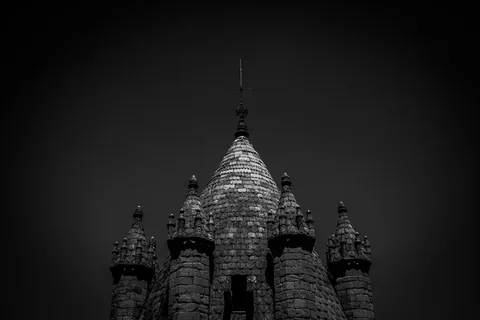
The Sé de Évora is the largest medieval cathedral in Portugal, begun in the late twelfth century. Its cloister is one of the finest examples of Gothic architecture in the country, and the rooftop terrace offers panoramic views across the Alentejo plain. A small admission fee covers access to the cloister and museum.
The Roman Temple
Standing in the centre of the old town, the Roman Temple of Évora — often called the Temple of Diana, though the attribution is uncertain — dates to the first or second century and is one of the best-preserved Roman monuments on the Iberian Peninsula. Fourteen Corinthian columns remain standing. Entry to the outdoor site is free.
Chapel of Bones (Capela dos Ossos)
Located inside the Church of São Francisco, the Chapel of Bones was constructed by Franciscan monks in the sixteenth century using the bones and skulls of approximately 5,000 people, sourced from the city's overflowing cemeteries. The inscription above the entrance reads: "Nós ossos que aqui estamos, pelos vossos esperamos" — "We bones that are here await yours." It is unsettling, extraordinary, and impossible to forget. A modest admission fee applies.
Praça do Giraldo
The central square of Évora has been the city's gathering point for centuries. A sixteenth-century marble fountain stands at its centre, flanked by arcaded buildings housing cafés and shops. It is a natural starting and ending point for any walk through the old town.
Day Trip or Overnight Stay?
A day trip is entirely feasible if you take a morning train or bus and return in the evening. You will have enough time to visit the Cathedral, Roman Temple, Chapel of Bones, and Praça do Giraldo, plus a long lunch.
An overnight stay is worth considering if you want to:
Visit Alentejo wineries in the surrounding countryside
See the megalithic sites (the Almendres Cromlech is one of the largest megalithic complexes in Europe, located about 15 km from Évora)
Eat dinner without watching the clock, since Évora's restaurants are an attraction in themselves
Experience the city in the quieter evening hours once the day-trip crowds have left
Where to Eat in Évora
Alentejo cuisine is among the most distinctive in Portugal, built on pork, black pork (from the Alentejano pig), bread-based dishes, and locally grown olive oil. Several dishes are worth seeking out:
Açorda alentejana — a bread-based soup with garlic, coriander, olive oil, and poached egg
Carne de porco à alentejana — pork with clams, a combination that sounds unusual and tastes exceptional
Migas — a thick side dish made from bread, garlic, and olive oil, served alongside pork or lamb
The streets around Praça do Giraldo and Rua República have a concentration of restaurants ranging from casual tascas to more formal dining rooms. Booking ahead on weekends in peak season is advisable for the more popular spots.
Practical Information
Detail
Information
Best time to visit
Spring (March–May) and autumn (September–November) for mild weather and fewer crowds
Time needed
Half day minimum; full day recommended; overnight for the surrounding region
Getting around
Entirely walkable within the old walls
Currency
Euro (€)
Language
Portuguese; English is widely spoken in tourist areas
Tipping
Not expected but appreciated; rounding up the bill is common
Opening Hours to Know
Opening times vary and are subject to change, so confirm directly with each site before visiting. As a general guide, major monuments in Évora typically open from mid-morning and close for a midday break in summer; most are closed on Mondays or have reduced Monday hours.
A Suggested Day Trip Itinerary
A straightforward structure for a single day:
7:30 a.m. — Take the first or second train from Oriente
9:15 a.m. — Arrive in Évora; walk or taxi to the city walls
9:30–11:00 a.m. — Roman Temple and a coffee on Praça do Giraldo
11:00 a.m.–12:30 p.m. — Évora Cathedral and cloister
12:30–2:00 p.m. — Lunch in the old town
2:00–3:30 p.m. — Chapel of Bones and Church of São Francisco
3:30–5:00 p.m. — Wander the backstreets, browse the market
5:30 p.m. — Return train to Lisbon
This leaves time to pause and explore rather than rushing between monuments.
Frequently Asked Questions
Do I need to book train tickets in advance?
Booking ahead is strongly recommended, particularly on weekends and during the spring and autumn travel seasons. Tickets are available on the CP website and at Lisbon stations.
Is Évora suitable for children?
The city is walkable and generally manageable with children, though the Chapel of Bones may not be appropriate for very young or sensitive visitors. The Roman Temple and open squares are engaging for all ages.
Can I visit Évora without a car?
Yes. Train and bus connections from Lisbon are reliable, and the historic centre is fully walkable. A car adds flexibility for the surrounding countryside but is not necessary for the city itself.
How far is Évora from Lisbon?
Évora is approximately 130 kilometres east of Lisbon by road, or about 1 hour 30 minutes by train or car.
Évora is one of the most rewarding day trips from Lisbon, and one of the few places in Portugal where Roman, medieval, and Baroque layers sit within walking distance of each other. The journey is short enough to leave plenty of time for the city itself — and the Alentejo table makes the case for staying at least one night.