Travel Guide · Serra da Estrela
How to Visit Serra da Estrela from Lisbon: The Complete Day Trip Guide
Everything you need to plan a Serra da Estrela day trip from Lisbon—driving routes, public transport options, what to see, and when to go.
In this guide
- How Far Is Serra da Estrela from Lisbon?
- Getting to Serra da Estrela from Lisbon
- By Car (Recommended)
- By Public Transport
- What to See and Do in Serra da Estrela
- Torre—Portugal's Highest Point
- Glacial Valley and Lagoa Comprida
- Manteigas
- Poço do Inferno Waterfall
- Hiking Trails
- Queijo Serra da Estrela
- When to Go
- Practical Information
- Is Serra da Estrela Worth a Day Trip from Lisbon?
- Frequently Asked Questions
- Can I visit Serra da Estrela without a car?
- Is Serra da Estrela open all year?
- Where should I eat near Serra da Estrela?
- How cold does it get at Torre?
- Is Serra da Estrela suitable for children?
- Getting the Most from Your Visit
The highest mountains in mainland Portugal sit about 300 kilometres north of Lisbon, and the journey rewards every kilometre of the drive. Serra da Estrela's granite plateau, glacial lakes, schist villages, and winter snowfields make it one of the most distinct landscapes in the country—a near-complete contrast to the coast and plains most visitors associate with Portugal.
This guide covers everything you need: how to get there, how long it takes, what to do when you arrive, and what to bring.
Key Takeaways - Serra da Estrela is approximately 300 km from Lisbon; the drive takes around 3 hours without stops. - A rental car gives the most flexibility; public transport to the park is possible but requires at least one bus connection from Covilhã or Guarda. - The Natural Park covers about 88,850 hectares and includes Portugal's highest point, Torre, at 1,993 metres. - Summer and early autumn offer reliable weather for hiking; winter brings snow but limited road access near the summit. - A comfortable day trip is possible but two days allow you to see both the high plateau and the valleys below.
How Far Is Serra da Estrela from Lisbon?
The centre of the Natural Park is roughly 290–310 km from central Lisbon, depending on your destination within the park. The two main gateway towns are Covilhã (approximately 295 km, on the eastern edge of the park) and Seia (approximately 270 km, on the western edge). Torre, the highest point, sits between them on the central plateau.
| Route | Distance from Lisbon | Approximate driving time |
|---|---|---|
| Lisbon → Covilhã (via A23) | ~295 km | 2 h 50 min |
| Lisbon → Seia (via A1/IP3) | ~270 km | 2 h 45 min |
| Lisbon → Torre (via Covilhã) | ~320 km | 3 h 15 min |
| Lisbon → Manteigas (via A23) | ~315 km | 3 h 10 min |
These times assume light motorway traffic. Friday afternoon departures from Lisbon or August travel add 30–60 minutes.
Getting to Serra da Estrela from Lisbon
By Car (Recommended)
Driving is the most practical way to explore the park. The main access roads pass through several distinct landscapes and the freedom to stop at viewpoints or detour into villages makes a significant difference to the experience.
Route via A1 and A23 to Covilhã (eastern approach): Take the A1 northbound from Lisbon, then join the A23 at Abrantes. The A23 climbs steadily toward Covilhã and offers views of the serra from a distance before you arrive. This is the fastest route and works well if Torre or Manteigas is your main destination.
Route via A1 and IP3 to Seia (western approach): Head north on the A1, exit toward Coimbra, then take the IP3 south-east toward Seia. The town sits in a valley directly below the park's western slopes. From Seia, the EN339 road climbs through pine and oak forest before opening onto the bare plateau. This route is slightly longer but the approach through the Mondego valley is picturesque.
Fuel and road notes: Fill up in Covilhã, Seia, or Guarda before heading up. The road to Torre (EN339/EN232) is well-paved but narrow in sections, and some stretches close during heavy snow. Check road conditions in winter at the Infraestruturas de Portugal traffic portal before departure.
By Public Transport
Public transport to Serra da Estrela is feasible but requires planning.
Train to Covilhã: Comboios de Portugal (cp.pt) runs intercity and regional services from Lisbon Oriente to Covilhã. The journey takes approximately 3 hours 30 minutes to 4 hours with a change at Castelo Branco or Guarda depending on the service. Check current timetables directly on the CP website, as schedules change seasonally.
Bus connections: From Covilhã, Rede Expressos (rede-expressos.pt) and local operators run limited services to Penhas da Saúde and other park villages. Services are infrequent; verify timetables in advance. From Guarda, there are bus connections to Manteigas.
Important: Public transport does not reach Torre or the interior of the park with any regularity. Visitors without a car typically base themselves in Covilhã or Seia and take taxis or pre-booked guided tours to the plateau.
What to See and Do in Serra da Estrela
Torre—Portugal's Highest Point
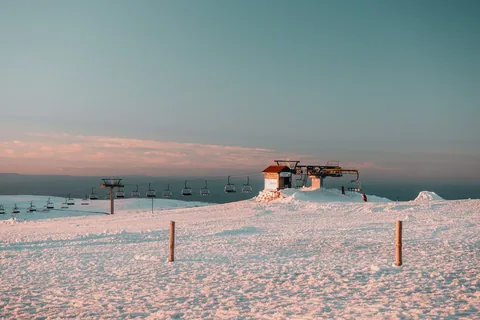
At 1,993 metres, Torre is the highest point in mainland Portugal (the Serra da Estrela Natural Park's official summit; Portugal's absolute highest peak, Pico in the Azores, reaches 2,351 m). The summit plateau is accessible by road, which makes it unusual among Iberian high points. In summer it is windswept and stark; in winter it accumulates enough snow for a small ski area with two short runs operated by the resort.
The tower at the top was built to bring the elevation symbolically to 2,000 metres—a quirk worth knowing before you arrive expecting something more dramatic. The views across the high plateau and, on clear days, toward the plains of the Alentejo are the real reward.
Glacial Valley and Lagoa Comprida
The Ice Age left clear marks on Serra da Estrela. The Vale do Zêzere is one of the best-preserved glacial valleys in the Iberian Peninsula, a classic U-shaped trough flanked by granite walls. You can follow the valley floor on foot from Manteigas.
Lagoa Comprida is the largest natural lake in the park, sitting in a shallow depression on the plateau at around 1,600 metres. The drive around the lake on a clear morning, with the water reflecting the sky and the granite boulders above, is one of the memorable moments of a visit to the serra.
Manteigas
The village of Manteigas occupies a narrow ledge above the glacial valley floor, roughly 760 metres above sea level. The schist houses, the spa at Caldas de Manteigas, and the access to the Zêzere valley hiking trails make it the most rewarding base in the park for those who want to spend more than a day.
Poço do Inferno Waterfall
A short and easy walk from the road near Manteigas leads to Poço do Inferno, a tiered waterfall that drops into a granite pool. Spring snowmelt gives it the most volume (April–May), but it flows year-round and the surrounding woodland makes the walk pleasant in any season. Bring appropriate footwear; the path is uneven.
Hiking Trails
| Trail | Start | Distance | Difficulty | Highlight |
|---|---|---|---|---|
| Glaciar do Zêzere | Manteigas | 12 km loop | Moderate | Full glacial valley |
| Rota da Lagoa Comprida | EN339 | 8 km return | Easy–Moderate | High plateau and lake |
| Cântaro Gordo | Sabugueiro | 6 km return | Moderate | Summit views |
| Poço do Inferno loop | Near Manteigas | 4 km | Easy | Waterfall and forest |
Official trail maps are available at the Natural Park visitor centre in Manteigas and from the ICNF park portal.
Queijo Serra da Estrela
Serra da Estrela gives its name to Portugal's most celebrated cheese. Made from the raw milk of Bordaleira sheep and curdled with thistle flower rather than animal rennet, the soft cheese has protected designation of origin (DOP) status. The authentic version is produced between November and March, when the milk is richest.
You can buy it directly from producers and co-operatives around Seia, Manteigas, and the villages of Sabugueiro and Lapa dos Dinheiros. The cheese is sold in two textures: soft (queijo amanteigado, spreadable) and cured (queijo curado, firmer). If you're visiting in summer, you'll find aged versions; if you're there in winter or spring, the fresh soft cheese is extraordinary.
When to Go
| Season | Conditions | Best For |
|---|---|---|
| Spring (Mar–May) | Cool, some rain, snowmelt waterfalls at peak flow | Hiking, wildflowers, waterfalls |
| Summer (Jun–Aug) | Warm to hot on the plateau, clear skies | Hiking, lake visits, village exploring |
| Autumn (Sep–Nov) | Cooler, atmospheric mist, changing vegetation | Hiking, photography, cheese season begins |
| Winter (Dec–Feb) | Cold, possible snow closure on EN339 | Snow scenery, skiing (limited), cheese season peak |
Summer is the most reliable season for road access and full park exploration. The plateau can feel exposed and cold even in July—bring a layer regardless of the forecast. Winter visits require checking road conditions for the summit road before departure.
Practical Information
Where to stay: For a day trip, no accommodation is needed, but it is a long day from Lisbon. If you plan to overnight, Manteigas, Covilhã, and Seia all have accommodation ranging from simple guesthouses to rural tourism properties. Booking in advance is essential in summer and during snow season.
What to bring:
- Warm and windproof layer (the plateau is significantly colder than Lisbon)
- Walking shoes or trail boots if you plan to hike
- Water and food—options on the plateau near Torre are limited to one or two seasonal kiosks
- Cash—smaller producers and rural cafés may not accept cards
Entrance fees: The Serra da Estrela Natural Park has no general entrance fee. Specific sites or guided activities may have costs; check with local operators.
Visitor centre: The main ICNF visitor centre is in Manteigas. Staff can advise on trail conditions, provide maps, and direct you to cheese producers and local accommodation.
Is Serra da Estrela Worth a Day Trip from Lisbon?
The return distance of roughly 600 km is on the outer edge of what works comfortably as a day trip. If you leave Lisbon by 7:00 or 7:30, you'll reach Covilhã or Seia by around 10:00, giving you five to six hours in the park before beginning the return drive.
That is enough time to reach Torre, walk a short trail, stop in Manteigas, and buy cheese. It is not enough to explore the valley properly or reach multiple areas of the park.
Two days is the better choice. The serra rewards unhurried exploration, and the drive back through the serra hills at golden hour—rather than in the dark after a long day—is one of the more pleasant ways to end a trip in Portugal.
Frequently Asked Questions
Can I visit Serra da Estrela without a car?
Yes, though it requires more planning. Train to Covilhã (approximately 3.5–4 hours from Lisbon) followed by a taxi or local bus to the park is the most practical public transport option. Guided day tours from Lisbon that include transport are available and remove the logistical complexity.
Is Serra da Estrela open all year?
The park is open throughout the year. However, the summit road (EN339) to Torre closes periodically in winter due to snow and ice. Check road conditions before departing if you're visiting between December and March.
Where should I eat near Serra da Estrela?
Covilhã and Seia have the widest choice of restaurants. Inside the park, Manteigas has a small number of cafés and restaurants serving local food—roast kid (cabrito), smoked meats, and river trout are common on menus. Serra da Estrela cheese, bread, and honey make an excellent picnic lunch if you're heading to the plateau.
How cold does it get at Torre?
Summit temperatures can be 10–15 °C lower than Lisbon at any time of year. In summer, a temperature of 15–18 °C at Torre while Lisbon is experiencing 35 °C is not unusual. In winter, temperatures below freezing are common. Dress in layers regardless of the season.
Is Serra da Estrela suitable for children?
Yes. The road access to Torre makes the high plateau accessible without hiking. The Lagoa Comprida area and the Poço do Inferno walk are both manageable for children of school age. The glacial valley trails are longer and best suited to older children and adults.
Getting the Most from Your Visit
Serra da Estrela is one of those places that expands the longer you stay in Portugal. Most visitors encounter it after the coast and the cities, and the contrast is striking—granite, cold water, sheepherding traditions, and a sky that feels genuinely high.
The drive itself is part of the experience. The A23 from Abrantes climbs through the Beira Baixa's wheat plains and olive groves before the serra rises on the horizon, and the approach through either Seia's valley or Covilhã's industrial outskirts gives way quickly to the park's stark interior. Allow yourself to stop.